

Strategy
Sustainability
Strategy
Noval Property, recognizing the substantial impact of buildings as major consumers of energy, our strategic imperative is to enhance our energy conservation practices. At the core of our strategy is the integration of innovative technologies to optimize energy usage.
Our journey begins by the examination of areas where electricity and thermal energy are consumed. Through a comprehensive gap analysis, we will identify opportunities for enhancement, ensuring a holistic approach to sustainable building operations. We will leverage data-driven insights to inform our decision-making.
Our strategy extends beyond technology implementation; it encompasses fostering a culture of energy consciousness within our organization. Employee/tenant engagement programs, coupled with targeted training initiatives, will empower our building users to actively contribute to our energy-saving objectives.
Furthermore, our strategy embraces continuous improvement. To that end we will establish key performance indicators (KPI’s) to determine the effectiveness of our initiatives. Regular assessments and adaptive measures will be implemented to stay responsive to evolving energy efficiency standards and emerging technologies.
This strategic roadmap is not just a commitment it is a pledge to be at the forefront of sustainable building practices, demonstrating environmental stewardship and securing a resilient future for our operations.
Noval Property through the implementation of sustainability principles in its business strategy aims at mitigating the salient sustainability-related risks and benefiting from the relevant opportunities. The Company is in the process of transforming its portfolio to become more resilient, adaptable, and appealing. Moreover, by incorporating the idea of circularity in its development projects the Company will have the ability to meet the ever-changing demand for sustainable assets in a more cost-effective way.
Noval Property’s sustainability strategy consists of the following
Three Strategic Pillars
- Resources Efficiency
Energy – Actions
Incorporate Innovative Building Design
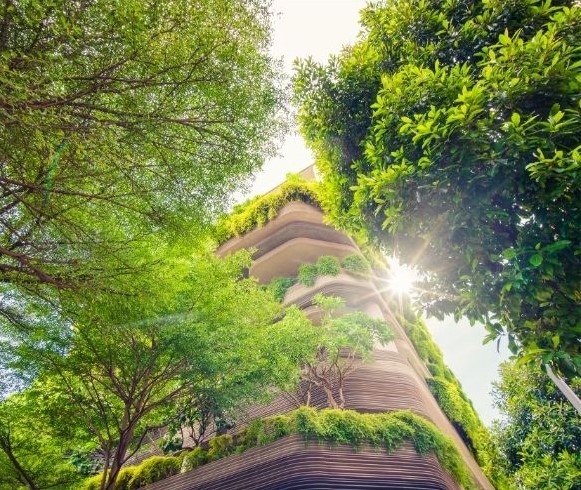
- Passive Design
- Design buildings with optimal orientation, natural ventilation, and strategic shading to reduce the need for artificial heating and cooling.
- Green Roofs
- Install vegetation on building tops, providing natural insulation and reducing the urban heat island effect.
- Multiple-glazed units
- Use of multiple glazed units with low-emissivity coatings to maximize natural light while minimizing heat gain/loss.
- Adaptive Reuse
- Consider adaptive reuse of existing materials/structures, reducing the environmental impact of new construction/major renovation.
Sustainability Certifications
- All new builds to be certified by international standards such as LEED, BREEAM, etc.
- Obtain sector specific sustainability rating from GRESB.
- Energy audits to all existing buildings and formulation of a cost-effective plan for EPC upgrades to increase portfolio’s alignment with the EU Taxonomy Regulation.
Integrate IoT in Building Management Systems (BMS)
- Energy Analytics: Utilize IoT data analytics to identify patterns and optimize energy usage across the income producing buildings, making real-time adjustments for improved efficiency.
- Smart Sensors: Install sensors for occupancy, light, air quality and temperature that are connected to a central IoT platform.
- Automated HVAC: Utilize IoT/AI technology on HVAC systems using smart thermostats that adjust settings based on occupancy and real-time weather conditions.
- Proactive Maintenance: Implement proactive maintenance using sensors to identify equipment malfunctions and address them before they cause significant damage, energy and/or resource waste.
Investment in Renewable Energy
- On-site PV Panels: Develop on-site PV panels to generate renewable energy for the buildings operations, reducing dependence on the Greek electricity grid.
- Partnerships with Renewable Energy Providers: Collaborate with local energy providers to purchase energy produced from renewable sources and support the expansion of renewable infrastructure in the region.
- Energy Storage Solutions: When financially feasible, implement energy storage solutions, such as advanced batteries, to store excess energy generated from renewable sources for use during peak demand periods.
- Employee Training: Provide training to employees on renewable energy systems and their benefits, encouraging their active participation in energy-saving initiatives.
Water – Actions
- Water Harvesting
- Implement rainwater harvesting systems to collect and reuse rainwater for landscaping and other non-potable purposes.
- Low-flow Fixtures
- Install low-flow faucets, showerheads, and dual-flush cisterns to minimize water wastage.
- Landscaping Design
- Choose drought-resistant native plants for landscaping, minimizing the need for extensive irrigation.
- Educational Campaigns
- Conduct workshops and awareness campaigns to educate tenants and employees about water conservation practices and the importance of water stewardship.

Integrating innovative building design and IoT technologies apart from improving the resource efficiency during the operation phase of the building, it also enhances the overall comfort, usability, and resilience. By incorporating the aforementioned actions, the Company can set new standards for sustainable and technologically advanced real estate developments. Regular monitoring and adaptation of these technologies will ensure that the buildings operate at peak efficiency levels throughout their expected lifecycle.
- Decarbonization
Actions
- Low Carbon Construction Materials
- Prioritize the use of low-carbon materials, such as recycled steel or aluminum, to reduce embodied carbon during the construction phase of a project.
- Sustainable Procurement
- Prioritize suppliers and contractors with robust environmental policies and practices, as reflected in Environmental Product Declarations, increasing the provision of low-carbon materials and services.
- Urban Green Spaces
- Integrate vegetated spaces within properties, creating natural carbon sinks within urban environments and enhancing overall air quality.
- Social Responsibility
Actions
- Social Impact Activities
- Actively engage with local communities in which the Company owns and operates assets in. The Company’s area of focus is towards the aid of the local communal spaces, children, and the less privileged people. The Company will continue to improve local infrastructures, support local sports clubs and events, provide educational programs regrading environmental stewardship, and improve the derelict communal areas.
- Health & Safety
- Demonstrating our commitment to the health and safety of our visitors, tenants, contractors, and employees the company is implementing a multifaceted approach to ensure their well-being. Our approach includes regular inspections of the construction sites to identify and address potential issues, the investment in advanced security systems, surveillance, and emergency response protocols to enhance the safety levels of our assets. Additionally, we are actively promoting health and safety awareness through informative campaigns and regular training sessions. By encouraging a culture of safety, we provide a secure and healthy environment within our assets.